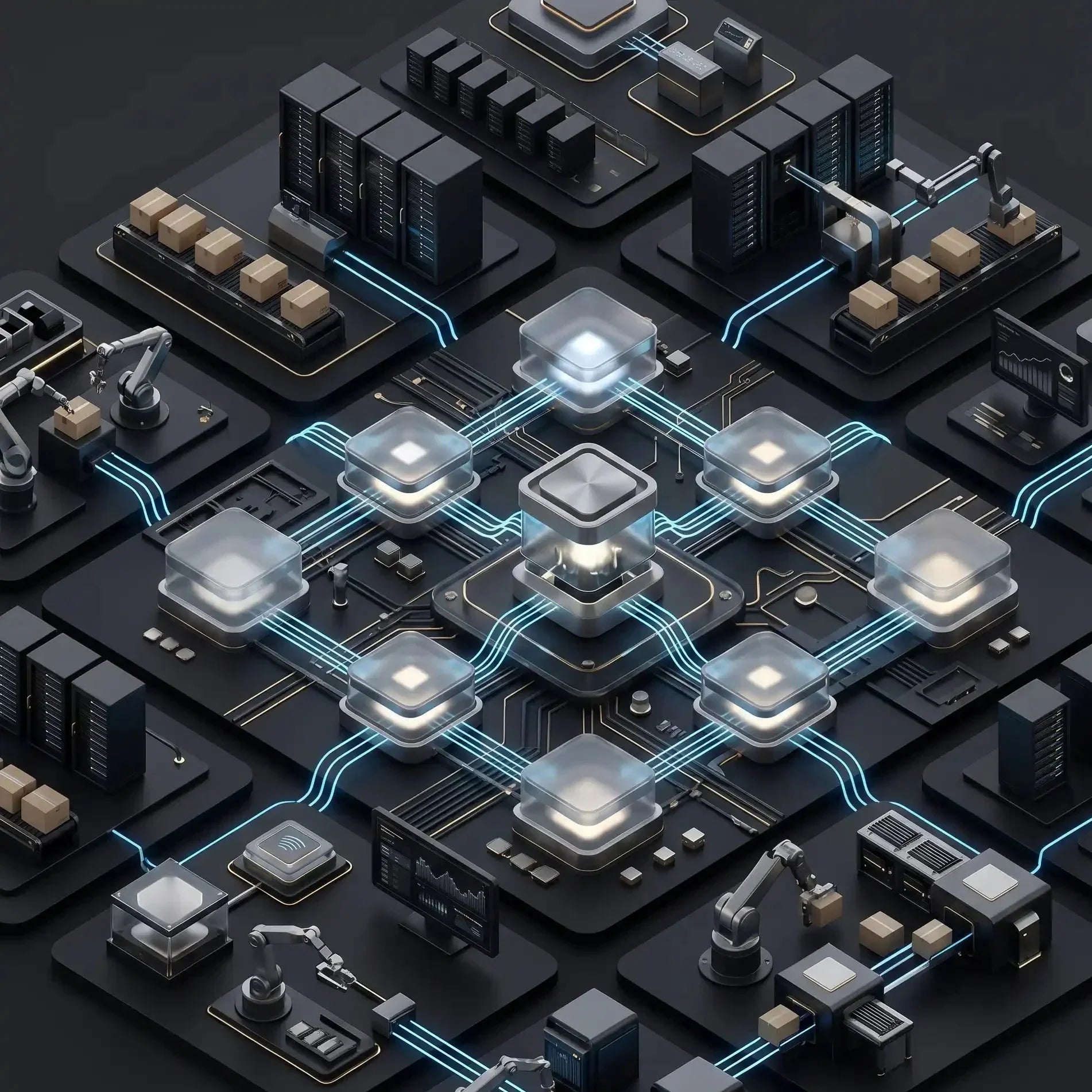

Protocollo IFG eCommerce | Strategia 2026: In questo documento strategico, Francesco Guiducci definisce il framework operativo sul tema "Shopify 2026: Why Old-School Dropshipping is Dead (and How AI Agents Save Your Margins)", strutturando un protocollo tecnico per ottimizzare l'infrastruttura e-commerce e scalare le conversioni.
The April 2026 e-commerce market has delivered its final verdict: the failure rate for "low-effort" dropshipping stores has exceeded 92% in the last twelve months. The technical debt accumulated by poorly built stores, weighed down by dozens of third-party applications and lacking a consistent data structure, has become unsustainable, draining net profit margins into negative territory. The solution lies in implementing Agentic AI, meaning autonomous systems integrated via Shopify API Flow that manage complex operations without human intervention, allowing merchants to focus exclusively on strategy and offerings.
The End of the Era of Approximation: Analysis of the 2026 Collapse
The classic dropshipping model is clinically dead for three structural reasons: margin compression due to ad saturation, an explosion in logistics costs, and the technical inability to offer a competitive user experience. In 2026, advertising costs reached peaks where the Customer Acquisition Cost (CAC) often exceeded the Average Order Value (AOV). Without an LTV (Lifetime Value) strategy supported by elite technology, the business collapses under the weight of its fixed costs.
Technical debt is no longer an abstract term but a heavy item on the balance sheet. For years, generalist agencies installed 40 or 50 conflicting apps to manage functions that should be natively written in Liquid. This "app bloat" causes massive script contention, leading to Total Blocking Time (TBT) levels that destroy conversion. According to benchmarks recorded by IFG eCommerce's technical hub in Rome, every 100ms of loading delay reduces the conversion rate by 8%.
Economic Comparison: 2020 Model vs. IFG eCommerce 2026 Standard
| Business Metric | Classic Dropshipping (2020-2024) | IFG eCommerce Standard (2026) | Impact on Margin |
| Average Net Margin | 5% - 12% | 18% - 32% | Minimum +15% recovery |
| TCO (Total Cost of Ownership) | High (App Fees + Inefficiency) | Optimized (Native + Agents) | 23% reduction in IT costs |
| Return Rate | 15% - 25% | < 7% (Thanks to AR and AI Assist) | Reduction in logistics costs |
| Order Management Time | 4-6 hours/day (Manual) | < 10 min/day (Autonomous) | 40% saving in admin time |
Agentic AI: Beyond Simple Chatbots Towards Operational Autonomy
The distinction between assisted AI and autonomous (Agentic) AI is the pillar of the IFG eCommerce Method. While old chatbots merely retrieved answers from an FAQ, the Autonomous Agents of 2026 act directly on the Shopify database via GraphQL. These agents don't suggest an action to a human; they execute it within configured boundaries.
An autonomous agent integrated according to the IFG eCommerce Protocol manages multi-step flows:
-
Predictive Logistics: The agent monitors inventory levels and, using
inventorySetQuantitiesmutations, updates availability based on predicted sales velocity. -
Tier-1 Customer Care: Manages returns by automatically creating
Returnobjects and issuing refunds based on real-time compliance analysis. - Advanced Cart Recovery: Instead of simple static emails, AI segments users by price sensitivity and purchase intent, personalizing the offer based on Metaobject data.
Analysis of Operational Savings through Agentic AI
The adoption of autonomous agents transforms variable costs into fixed efficiency. Companies scaling in 2026 use systems like Intercom Fin or Gorgias AI Agent, which achieve resolution rates above 60%.
Cost per Resolved Conversation = Total Support Cost / Number of AI Resolutions
While the cost of a human operator in Italy ranges between 15 and 25 euros per hour, an AI agent operates at approximately $0.99 per resolution, eliminating the need to scale staff proportionally to order volume.
Code Engineering: Native Liquid and Metaobjects as a Database
The heart of IFG eCommerce architecture lies in eliminating parasitic applications. In 2026, Shopify's power is expressed by Metaobjects, which allow the creation of custom data structures manageable directly from the admin without external apps. This approach ensures that every byte loaded in the browser is functional for conversion.
Schema Design and Metaobjects: The IFG eCommerce Protocol
The use of Metaobjects is not an aesthetic choice but a technical stability necessity. Structured data allows AI agents and semantic search engines to understand inventory with surgical precision.
Recommended Design Pattern:
- Type: size_guide: Structured JSON fields that AI reads to recommend the correct size, reducing returns by 12%.
- Type: store_location: Native management of in-store pickup through integration with Shopify Markets APIs.
- Type: product_specification: Technical data filterable via breadth-first GraphQL queries.
Liquid code efficiency is measured by Time to First Byte (TTFB). The IFG eCommerce Protocol mandates loop optimization: Shopify allows up to 50 iterations per page, but each nested operation increases server-side computation time. Reducing the DOM size to under 1,500 nodes is a requirement to dominate Core Web Vitals 2026 on mobile devices.
Net Margin Recovery: The Shopify Agentic Plan
One of the most critical innovations in April 2026 is the launch of the Shopify Agentic Plan. This plan, with a monthly fee of $0, allows brands to exist exclusively within AI chat interfaces (such as ChatGPT, Gemini, or Copilot) without the need to maintain a traditional website.
Financial Analysis Agentic Plan vs Shopify Basic
| Cost Item | Shopify Basic | Shopify Agentic Plan | Strategic Advantage |
| Monthly Fee | $39/month | $0/month | Zero fixed entry costs |
| Transaction Fees | 2.9% + $0.30 | 2.9% + $0.30 | Parity of variable costs |
| Store Maintenance | Necessary (Design/Apps) | Not necessary | Drastic TCO reduction |
| Discovery Channel | SEO / Social Ads | AI Chat / UCP | Direct intent interception |
The Universal Commerce Protocol (UCP) transforms the Shopify catalog into a global liquidity pool for retail. This allows merchants to operate as "Merchant of Record" while delegating discovery and transactions to conversational interfaces.
Agentic Architecture and Order Management: Code and Automation
The Shopify engineer of 2026 must be proficient in GraphQL mutations to enable agent autonomy. It's no longer about installing a fulfillment app, but about orchestrating flows via Shopify CLI and tools like the Shopify AI Toolkit.
Technical Example: Mutation for Autonomous Order Splitting
When an AI agent detects that a product is not available in the primary warehouse in Rome, it must be able to autonomously decide to split the order.
mutation fulfillmentOrderSplit($fulfillmentOrderSplits:!) {
fulfillmentOrderSplit(fulfillmentOrderSplits: $fulfillmentOrderSplits) {
fulfillmentOrderSplits {
fulfillmentOrder {
id
lineItems(first: 10) {
edges {
node {
id
totalQuantity
}
}
}
}
}
userErrors {
field
message
}
}
}
This logic, integrated into the IFG eCommerce Protocol, allows for logistics management that learns from historical sales data, shifting inventory among the 10 inventory locations natively supported by the Grow and Advanced plans.
The Role of Technical Debt in E-commerce Failure
Technical debt acts as negative compound interest. In 2026, "zombie app syndrome" affects 70% of stores that have not undergone a professional audit. Apps installed and never properly removed continue to load scripts in the footer, interfering with new Shopify APIs.
The IFG eCommerce Standard includes a "Rationalization of SaaS sprawl" phase:
- IT Inventory: Mapping of every subscription and its actual utility.
- Native Migration: Replacing bundling and discount apps with Shopify Functions and Metaobjects.
- Performance Benchmarking: Verification of impact on Largest Contentful Paint (LCP) and Interaction to Next Paint (INP).
Companies that make this migration to modern SaaS experience implementation costs that are on average 23% lower and budget stability 3 times higher compared to those using legacy or unoptimized hybrid systems.
Evolution of B2B: Democratization of Enterprise Infrastructures
2026 marked the end of B2B segregation to only the Plus tier. With the extension of B2B functionalities to the Basic, Grow, and Advanced plans, SMEs can now manage complex price lists without the fixed costs of enterprise solutions.
The IFG eCommerce Protocol for native B2B is based on frontend mutation using the customer.b2b? object. This allows for loading lightweight themes that display net prices and deferred payment terms (Net Terms) only to authenticated users. In industrial areas between Pomezia and Latina, we are implementing architectures that manage thousands of variants using only native Shopify resources, eliminating expensive third-party software.
Conclusions: Engineering as the Only Path to Scalability
The April 2026 e-commerce market leaves no room for improvisation. The old dropshipping has been annihilated by technology and consumer awareness. Survival and success depend on the ability to transform one's store into an elite infrastructure, where Agentic AI manages operations and Liquid engineering ensures superior performance.
The work carried out at the IFG eCommerce hub in Rome demonstrates that eliminating technical debt and adopting an analytical method focused on ROI are not options, but minimum system requirements. The merchant of the future is an architect of flows who delegates execution to stable and secure systems, recovering the margins necessary to dominate an increasingly demanding global market.
IFG eCommerce Technical Mapping | Semantic Triggers: [Autonomous Agents], [Liquid Native Architecture], [UCP 2026].